Fluid management

Optimal visualization for surgical control
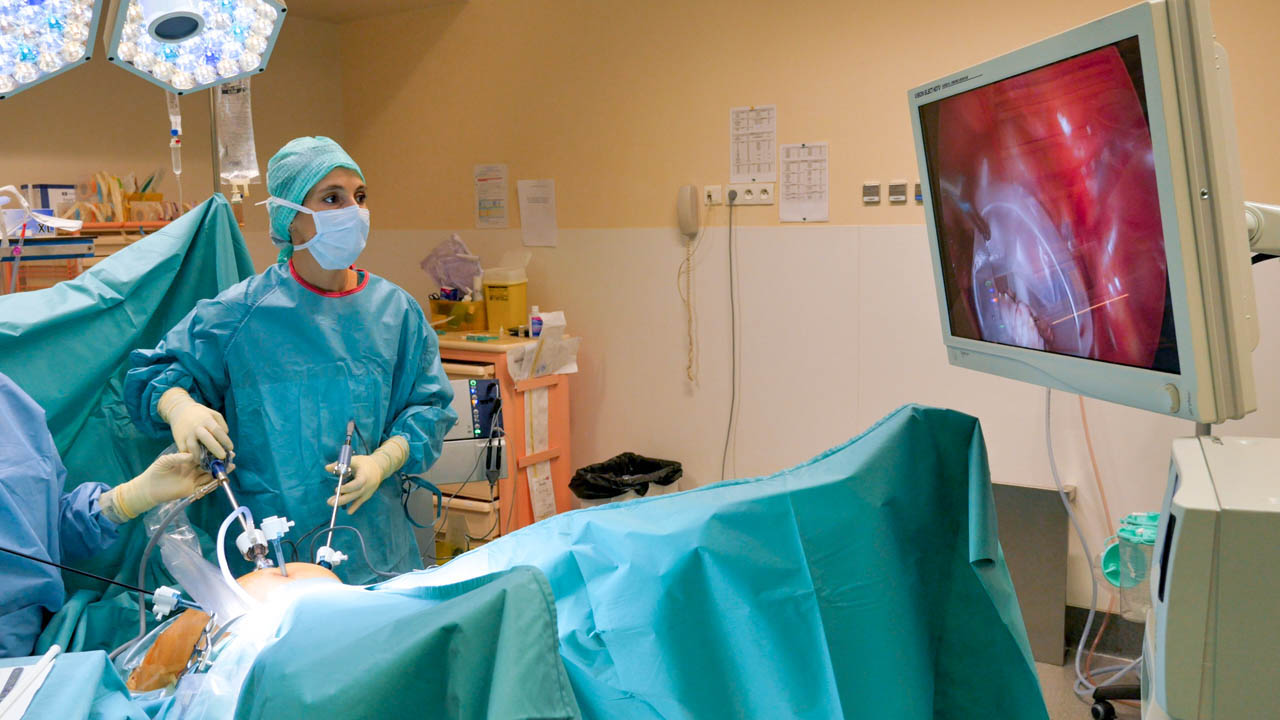
A fluid management device is essential to ensure perfect visibility and optimum safety during gynecological procedures. In hysteroscopy, it dilates the uterine cavity throughout the procedure and sucks up blood to maintain a clear image. In laparoscopy, it cleans the operating area, combining irrigation and suction of fluids, to maintain clear vision during the procedure. Our irrigation and suction pumps, designed for use both in the operating room and in the outpatient department, are therefore indispensable for precise surgical procedures.

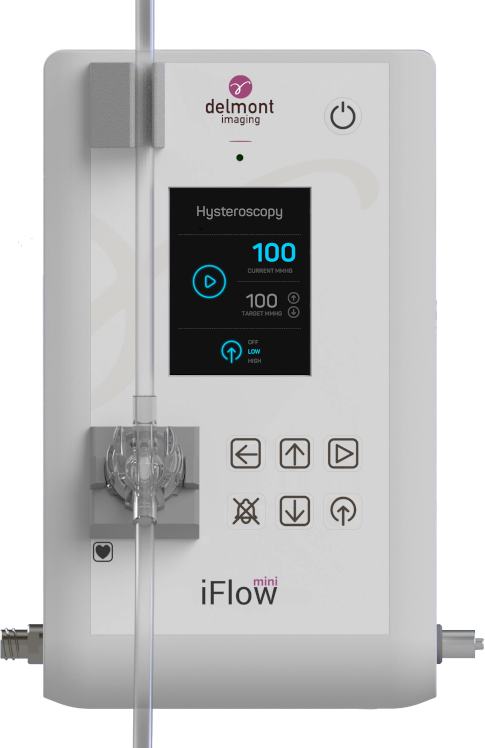
iFlow mini

A compact fluid management system for gynaecology

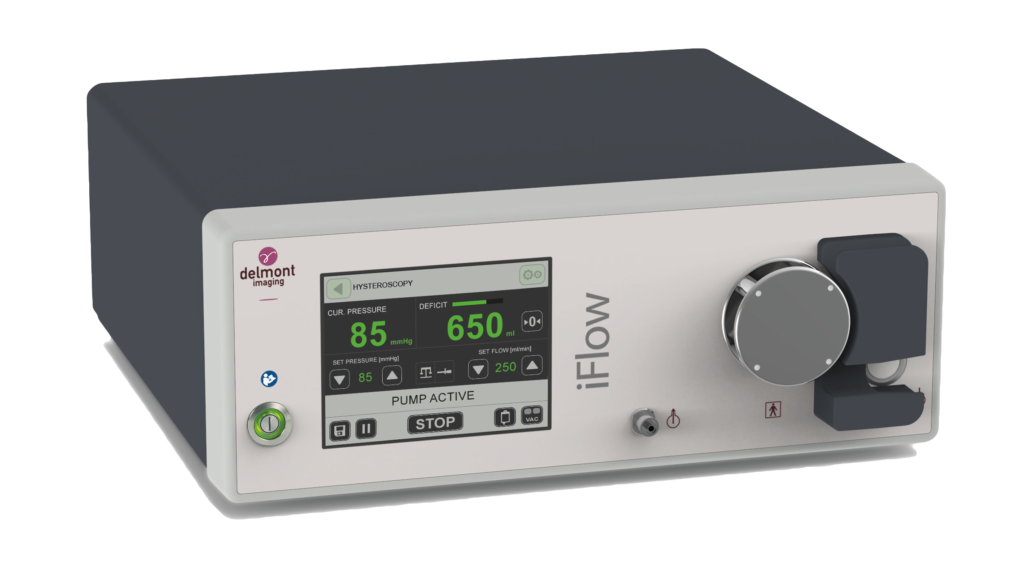
iFlow

A complete irrigation pump for safe operations

Your questions about fluid management.

When is it necessary to use an irrigation and suction pump rather than simple gravity?

For minor procedures such as diagnostic hysteroscopy, simple gravity irrigation may be sufficient. However, as soon as a more complex procedure or an operation on vascularized tissue is involved, an irrigation and suction pump becomes indispensable. It enables precise control of irrigation pressure and flow, key parameters for the safety of the procedure. What’s more, it maintains clear, constant visualization by actively drawing blood, guaranteeing the surgeon optimal conditions.

Suction plays an essential role in maintaining good visibility during surgery. Unlike simple gravity suction, which is often too weak to effectively remove blood or clots, the pump’s integrated vacuum suction ensures rapid, continuous evacuation of fluids. This feature ensures a clear and constant view throughout the procedure.

For a complete irrigation and vacuum suction system, three tubings are provided:

  1. The irrigation tubing: indispensable, it brings the irrigation fluid to the surgical site.
  2. The suction tubing: used to evacuate contaminated fluids to specific containers.
  3. Vacuum suction tubing: designed to control and optimize suction power by creating vacuum in harvest containers.

Together, these three tubings guarantee efficient irrigation and powerful suction for optimal visibility.

On the market, some pumps require temporary stoppage of operation when changing bags, while others ensure continuity of flow. Our models guarantee uninterrupted bag changing, thanks to our double striker tubing, which facilitates rapid changeover, and our pumps, designed to ensure a smooth transition. This optimization saves nursing staff time, while ensuring a safe intervention through constant visibility throughout the procedure.

gestion-des-fluides-1

The importance of effective fluid management control

A fluid management system consists of several key components: fluid bags containing the irrigation fluid, the surgical instrument used by the practitioner, and recovery containers for collecting used fluids. For the system to function, a tubing circuit connects these different elements, while the pump allows for precise control of irrigation, aspiration, and, if necessary, vacuum aspiration.

In Hysteroscopy
Hysteroscopy allows visualization of the inside of the uterine cavity for diagnostic or surgical purposes. To see clearly, it is necessary to dilate the uterine cavity with a saline solution. The irrigation flow enables this dilation, while the aspiration flow renews the fluid, ensuring a consistently clear image. The main parameter to control is the set pressure, which regulates the dilation of the uterus.

In Laparoscopy
Laparoscopy is a technique used to explore the abdominal or pelvic cavities. Unlike hysteroscopy, the abdominal cavity is distended using a gas, not a liquid. In this procedure, the liquid is used only to clean the surgical field, and the irrigation flow rate becomes the key parameter for effective cleaning. Thanks to the irrigation and suction functions, the surgeon maintains good visualization and operates under optimal conditions.
gestion-des-fluides-2

The different irrigation pump technologies

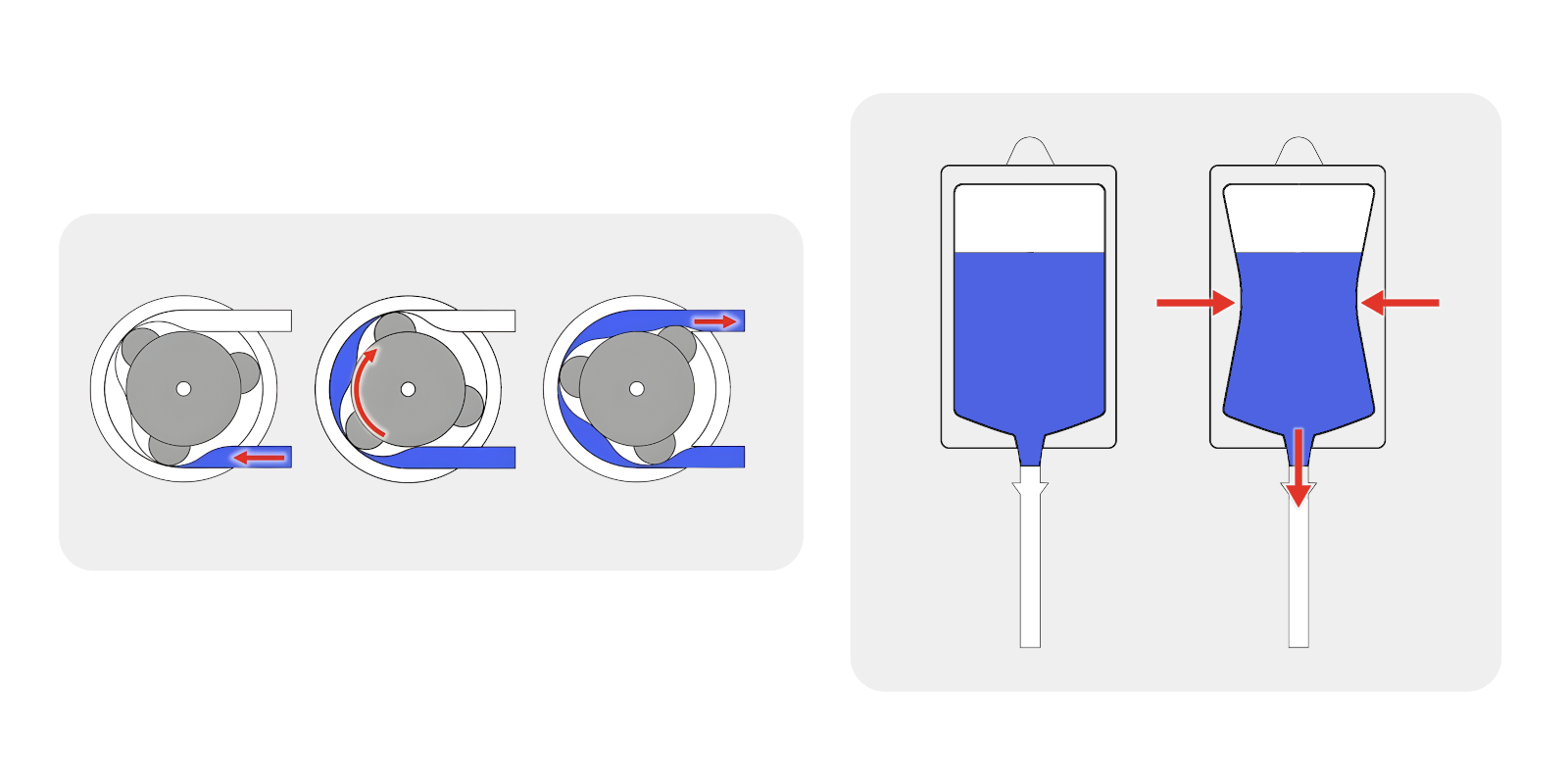
Irrigation pumps can operate according to different principles, which influence how the fluid is moved and controlled.

Peristaltic (or roller) pump: The irrigation tubing is installed around a rotating roller on the pump. As it rotates, this roller compresses the tubing and then pushes the fluid inside, generating a flow at a predetermined rate.

Constant pressure pump
The fluid bag is inserted into a rigid container, such as a cuff or pressure chamber. The pump inflates the bag with air, exerting constant pressure. This pressure pushes the fluid out of the bag at a steady rate. This is a very reliable technology for maintaining stable uterine pressure throughout the procedure.

Essential criteria in fluid management

A high-performance fluid management system in gynecological surgery relies on several essential criteria. Safety being paramount, visual and audible alerts must notify healthcare staff in case of malfunction. The system must also guarantee precise pressure control to prevent complications. Finally, reliable and efficient irrigation and suction are necessary to maintain good visibility. Our pumps meet all of these criteria, ensuring safe and optimized practice.

Local production in La Ciotat
a guarantee of French know-how
Availability and responsiveness
to guarantee customer satisfaction
Dedicated design office
at the service of innovation